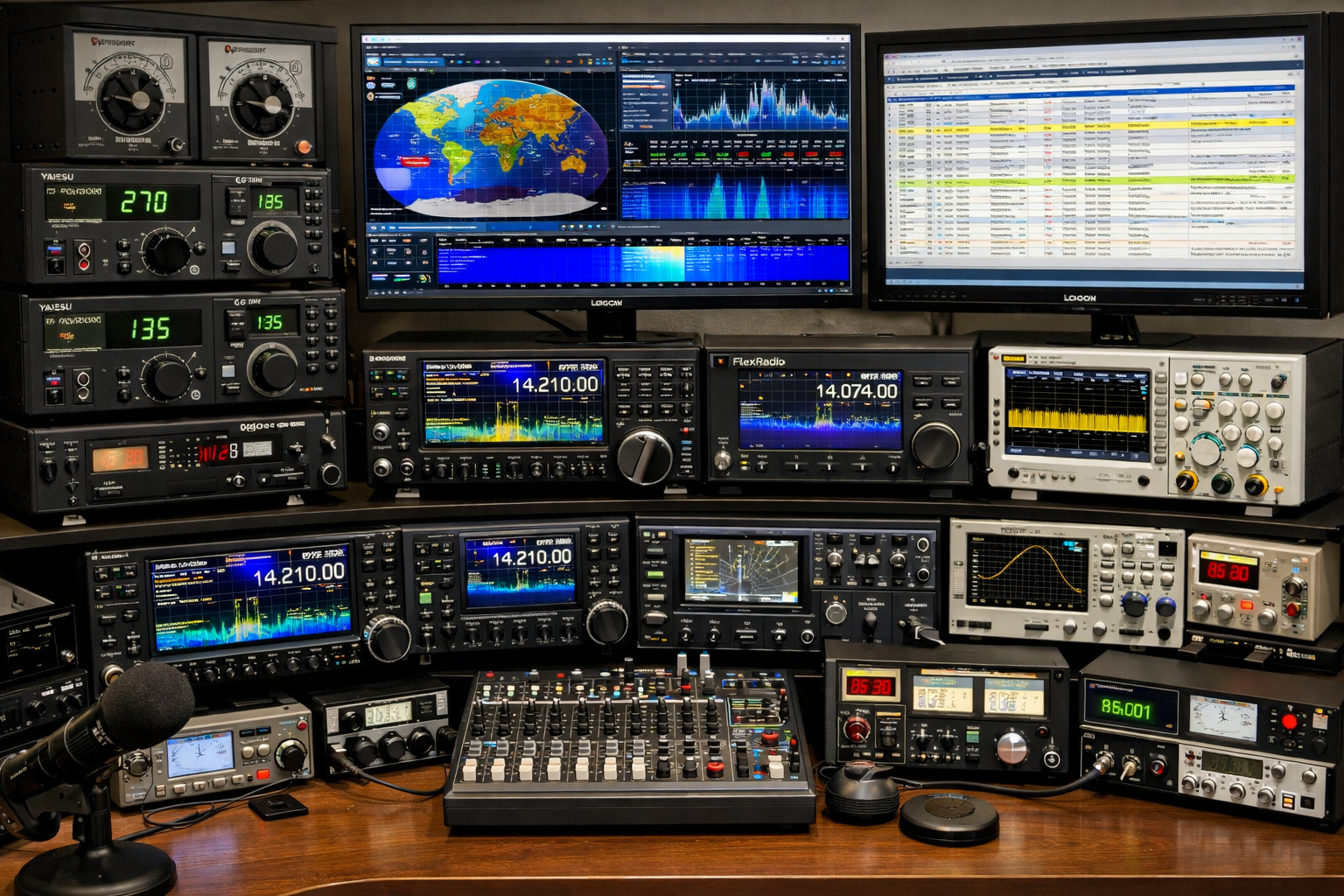
Taking Ham Shack Audio to a Whole New Level!
03/11/26 17:25
By Greg Lewis, N5XO
Cleaner Audio — Better Communications — More Enjoyable Operating!
One of the things I have always loved about Amateur Radio is that there is ALWAYS something new to learn, experiment with, improve, or simply have fun building. After decades in this hobby, I still get excited about a new project, especially one that can make a real difference in how I enjoy operating.
My latest adventure is a complete Ham Shack Audio Enhancement System, and I am REALLY excited about the possibilities!
So, What Am I Building?
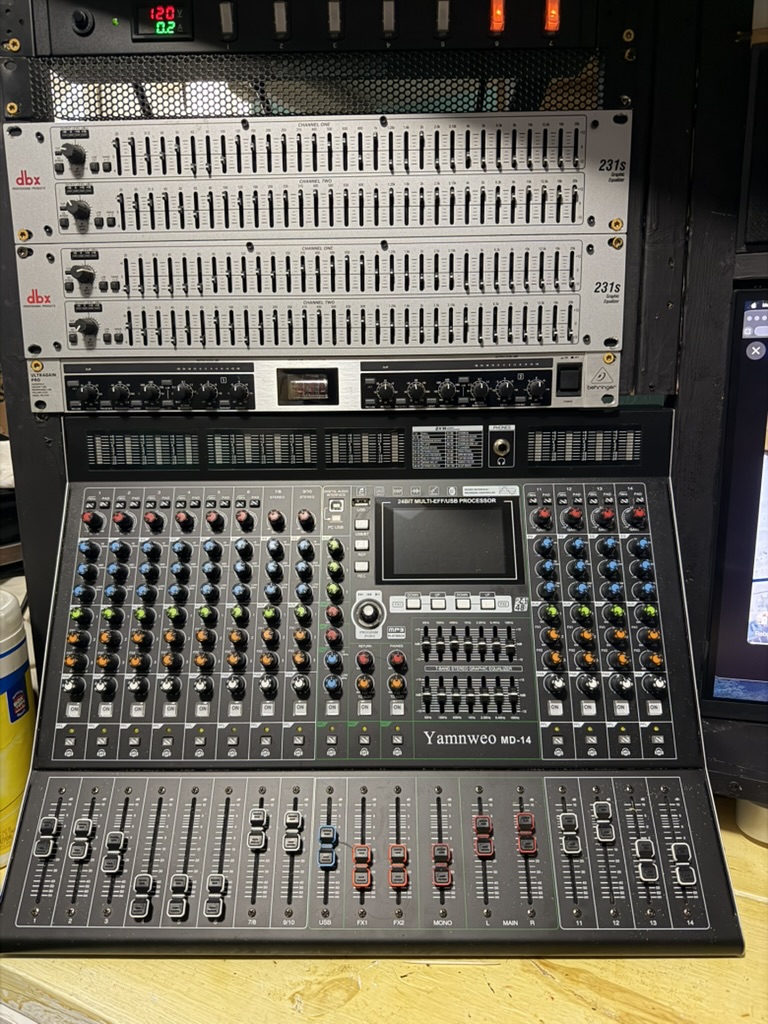
My shack has multiple radios covering HF, VHF, UHF, and SHF, with a particular emphasis on weak-signal SSB and CW operations. I've always wanted a way to bring the receive audio from my various radios together, improve the sound quality, reduce listening fatigue, and have much greater control over what I hear.
At the heart of this project is a Yamnweo MD-14 digital audio mixer, along with a Behringer Ultragain Pro microphone preamplifier, two dbx 231s graphic equalizers, quality microphones, Klipsch studio speakers, and my Mac computer.
The idea is to route audio from several radios through one central system, giving me individual control over audio levels, equalization, filtering, and routing.
Imagine monitoring several bands simultaneously, adjusting each receiver independently, and listening through a good pair of studio monitors instead of several small communications speakers scattered around the shack!
THAT is something I am looking forward to!
Why All the Excitement?
For me, the biggest benefit is improving the actual operating experience.
Anyone who has spent hours listening for weak VHF/UHF signals knows how tiring receiver hiss, background noise, and harsh audio can become.
With this system, I will be able to experiment with equalization, audio processing, and filtering to emphasize the frequencies that make speech easier to understand. While no audio processor can magically recover a signal buried below the noise, proper adjustment can make marginal signals more intelligible and long operating sessions considerably more comfortable.
There are several benefits I'm particularly excited about:
- Better receive audio: Individually adjust the tone, levels, and filtering of each radio.
- Improved weak-signal listening: Experiment with audio settings optimized for SSB, CW, and different operating conditions.
- Better transmitted audio: Use quality microphones, proper equalization, and level control to produce clear, natural-sounding transmissions without excessive processing.
- Multiple-radio monitoring: Listen to several receivers through one centralized audio system.
- Recording contacts: Digitally record and archive rare DX contacts, band openings, contests, nets, and special events.
- Custom audio setups: Develop different settings for SSB, FM, CW, and general monitoring.
Now I intend to have that capability readily available!
But I'm Going a Step Further!
My particular installation is considerably more elaborate because I have another goal in mind.
I want the shack equipped for LIVE AUDIO AND VIDEO STREAMING!
Eventually, I want to be able to stream activity directly from the shack, including operating sessions, band openings, contests, demonstrations, technical training, and perhaps even some live HAMster activities.
The audio mixer will become an important part of that capability, allowing me to select and control which radio audio, microphones, and computer audio are included in a live broadcast.
It also opens up some interesting possibilities for remote participation, recording training sessions, and sharing the excitement of weak-signal Amateur Radio with others.
This is particularly exciting as we continue developing our ACCENT BBS system and expanding what we can offer our fellow HAMsters.
NOW, HERE IS SOMETHING IMPORTANT!
YOU ABSOLUTELY DO NOT HAVE TO BUILD ANYTHING THIS ELABORATE!
I want to emphasize that point because I don't want anyone looking at the equipment and thinking this is what it takes to improve their shack audio.
IT DOESN'T!
You can make meaningful improvements with a simple audio equalizer, a small inexpensive mixer, better speakers, or even a good pair of headphones.
A modest setup involving one radio, a basic equalizer, and an external speaker can make a noticeable difference in listening comfort and intelligibility.
My system is more complicated because I am combining several goals into one project: multiple radios, transmit and receive audio processing, digital recording, computer integration, and eventually live audio-video streaming.
Start simple, experiment, learn, and expand as your interests grow!
The Real Reason I Love Projects Like This
Amateur Radio has never been just about buying equipment and getting on the air for me.
It's about experimenting, understanding how things work, finding ways to improve them, and sharing what we learn with others.
Will I get everything adjusted perfectly the first time? ABSOLUTELY NOT! I'm sure there will be some head-scratching, rewiring, experimenting, and probably a few colorful words along the way!
But that's half the fun!
I'm looking forward to getting this system fully integrated, experimenting with different audio configurations, and sharing the results, including what works, what doesn't, and what I would do differently.
And perhaps most importantly, I hope it encourages a few other operators to experiment with improving their own shack audio.
Because sometimes the most enjoyable improvements in Amateur Radio aren't about transmitting more power or putting up another antenna. Sometimes they're simply about hearing what you've been missing!
73,
Greg — N5XO HAMster Weak Signal Group Experimenting, Learning, and Having FUN with Amateur Radio!